
· 5 min read
Giant games for corporate events: a complete guide
Giant chess, Jenga, Twister, Connect 4, the Game of the Goose, Guess Who, tangram and human table football for corporate events.
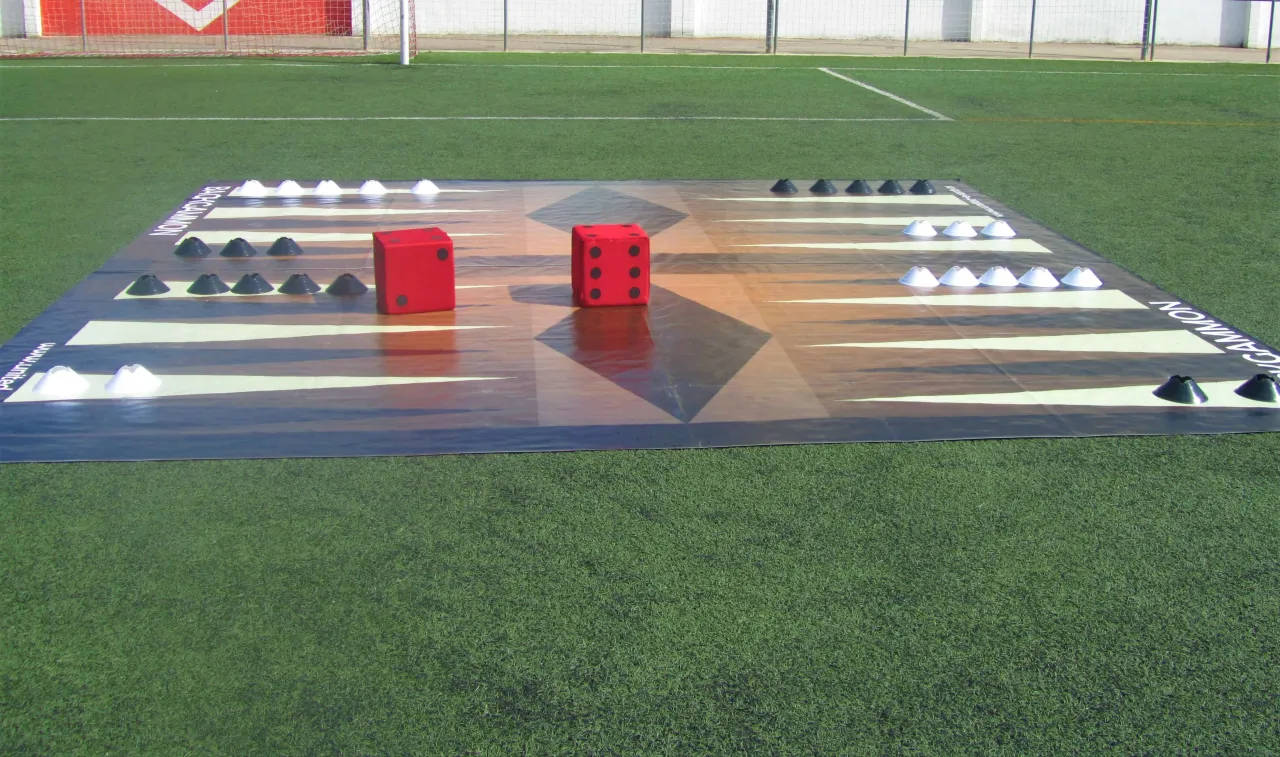
A five-metre chessboard with pieces you move by walking, or a tower that creeps toward two metres before it falls: giant games for corporate events are the board games everyone grew up with, just built at a scale that makes people stand up, comment on the next move with whoever's next to them, and almost always draw a small crowd of spectators.
If you're planning a conference, a trade show, a corporate family day, or simply want your next company dinner to offer more than an open bar, this guide runs through the giant games available, what they bring to a team dynamic, and how to organise them without complications.
Giant chess: the classic that never fails in a lounge area
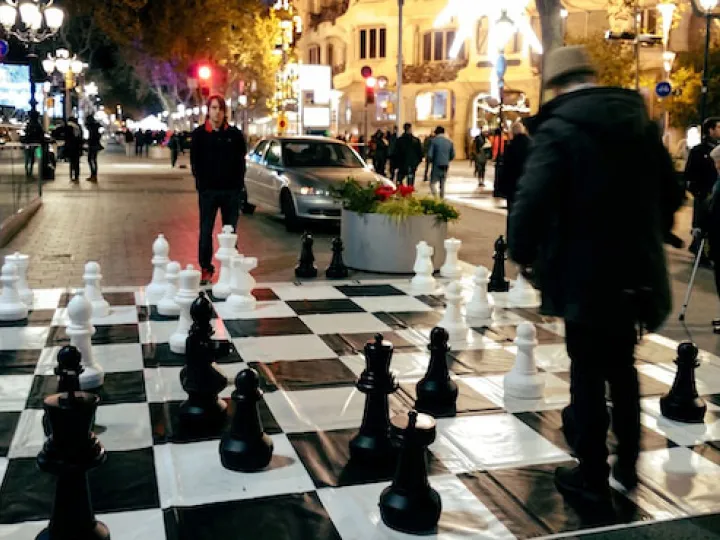
Giant chess sets up a 5 × 5 metre board with pieces that move as people walk them across it. You don't need to play well: two people facing off is enough for everyone else to start weighing in on the next move, which is exactly the point of the giant format.
It works especially well as a permanent decorative feature in a lounge or networking area, because even when nobody's actually playing, the board alone draws curiosity and makes people stop to look.
Giant Jenga and Twister: the games that gather a crowd without a host
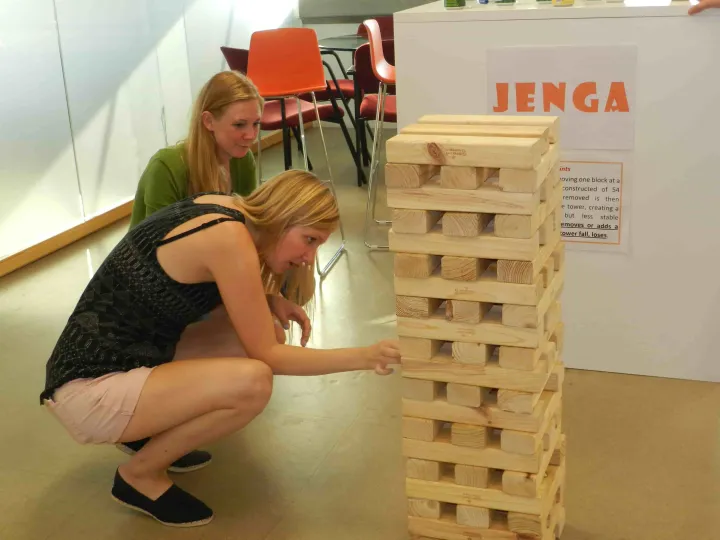
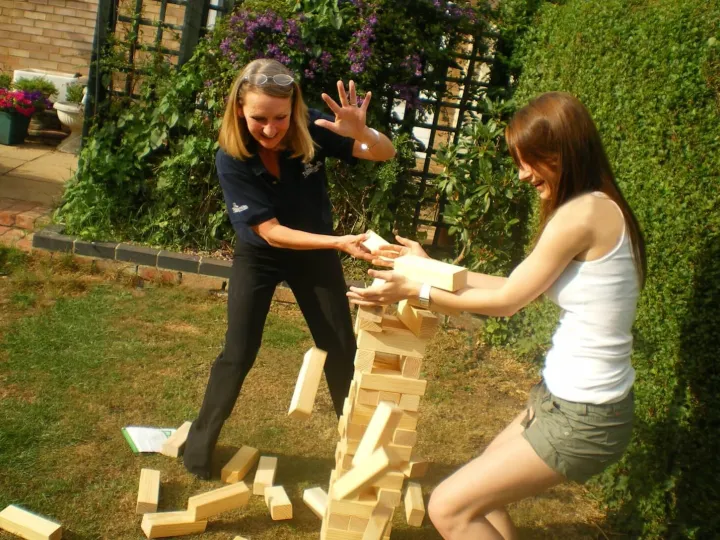
Giant Jenga starts at 90 centimetres and, as the game goes on, can top one metre eighty. Every block that comes out creates that tense silence that makes people stop what they're doing to watch. It's one of the games that needs the least explaining: it explains itself just by looking at it, and the suspense does the rest of the work.
Giant Twister adds the physical element: a 5 × 5 m board, a giant spinner and, if you want, a host calling out the moves and raising the energy. It's one of the games that work best in the more informal part of a company party, when the goal stops being about competing and starts being about laughing.
Giant Connect 4 and the Game of the Goose: quick duels for conference breaks
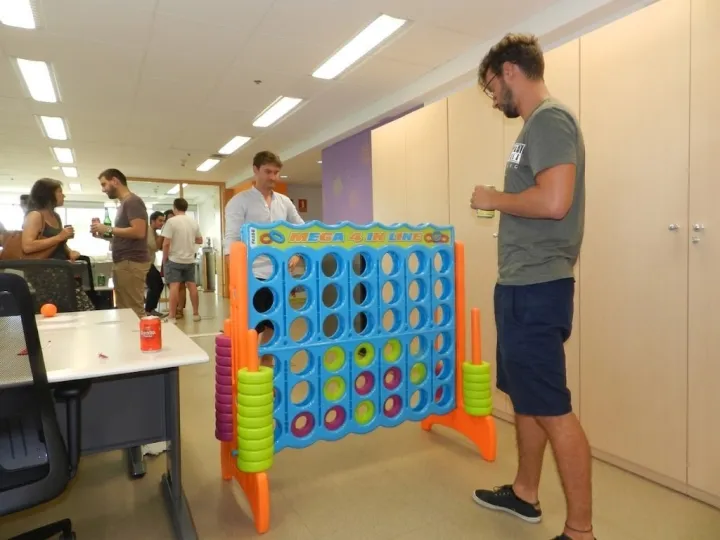
Giant Connect 4 is the shortest game of the lot: five minutes between two players on a 1.2-metre frame is enough to decide a winner. That's why it works so well in conference breaks and waiting areas: nobody has to commit to a long game just to take part.
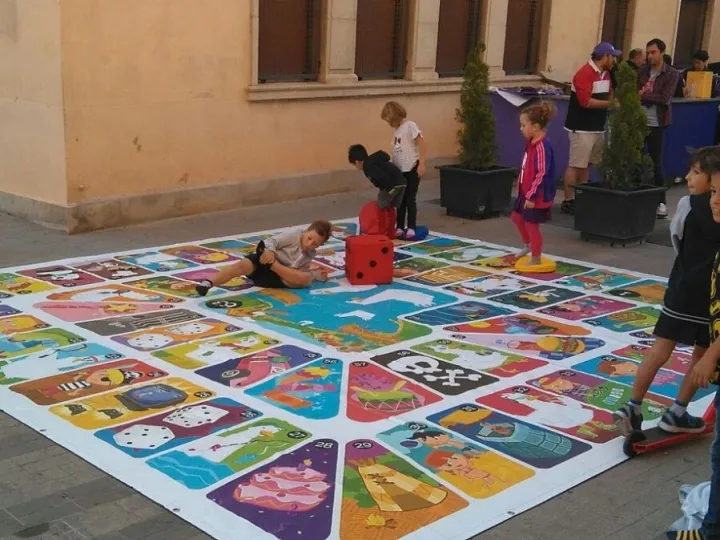
The giant Game of the Goose moves at a slower pace and turns the participants themselves into pieces that advance square by square on a 5 × 5 metre mat with a giant die. It's a calmer option, well suited to team dynamics between departments that don't know each other that well yet.
Giant Guess Who and Tangram: challenges that bring the team together
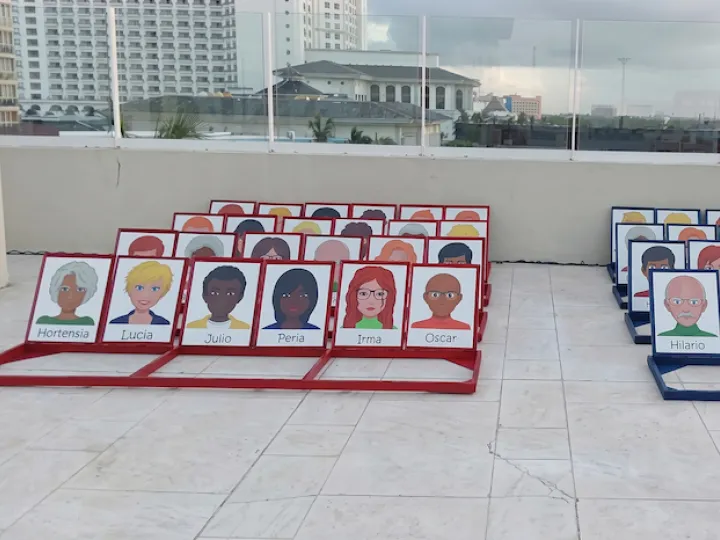
Giant Guess Who has a special corporate version where the original game's characters are swapped for photos of your own team. It's one of the few giant games that can be personalised to that extent, and it's almost always the one people are still talking about the next day.
Giant tangram demands real collaboration: teams have to reproduce a figure using all seven pieces together, so it works as a group logic challenge rather than an individual game. It's one of the ones that fit best into team-building sessions with a clear goal.
What giant games bring to a team-building session
The difference with a regular board game isn't just the size. When pieces have to be moved by walking them, or when the team itself becomes the pieces on the board, the game stops being something you watch and becomes something you do together. That's exactly what any team-building dynamic is after: getting people talking, organising themselves and laughing without anyone having to steer the conversation.
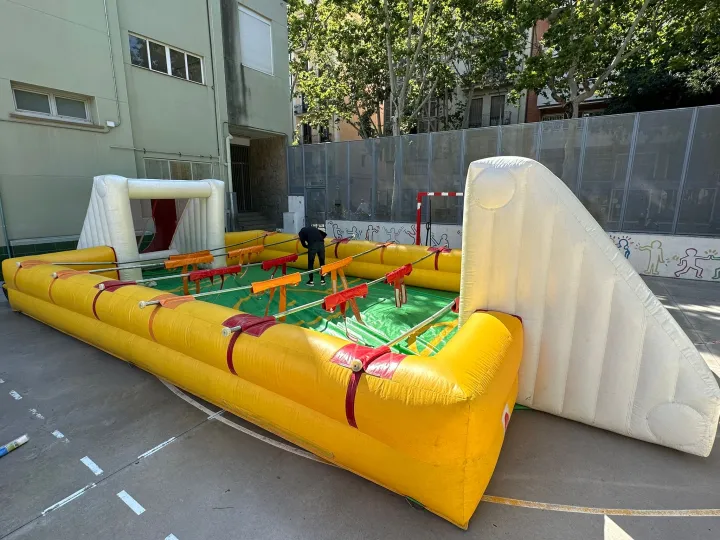
Human table football takes that idea even further: it puts ten people inside a 9 × 5 metre inflatable pitch where they can only move sideways, holding onto a bar, just like on a real table football table. As with the giant Game of the Goose, here players don't move pieces — they are the pieces.
Most of these games are set up on 5 × 5 metre mats or similar, so if you're combining several of them the usual approach is to set aside a generous area outdoors or in an open hall, letting groups rotate between them instead of forcing everyone to play at once. You can browse the full giant games catalogue to get a sense of every possible combination.
Personalising games with your company's brand
Many of these games allow for some level of personalisation: the clearest example is Guess Who with your own team's faces, but several others can also have their colours and graphic elements adapted to match your brand identity. If you want to go further and turn the game into part of your brand communication, the custom branding for games page explains what can be adapted and how it's done.
You don't need to personalise everything: sometimes it's enough for the staff running the game to wear your company's uniform, or for your logo to sit somewhere visible next to the board, for the activity to stay linked to your brand while still being, above all, a game.
Frequently asked questions about giant games for companies
How much space does a giant game need?
Most giant boards — chess, the Game of the Goose, Twister — are set up on a 5 × 5 metre mat. Jenga and Connect 4 take up considerably less space, so they're a good option if the venue is tighter; at the other end, human table football needs a 9 × 5 metre inflatable pitch.
Do they need a power supply?
No: the vast majority of these giant games don't need a nearby power point. If your event is outdoors and you're worried about the electrical setup, mention it when you request a quote and we'll tell you exactly what each game needs.
Can several giant games be combined in the same event?
Yes, that's actually the norm. The usual approach is to set up between three and five games in the same area so groups can rotate freely between them, rather than funnelling everyone into just one.
Do they need staff to run them?
It depends on the game: chess, the Game of the Goose or Connect 4 explain themselves, but Twister works better with a host calling out the moves, and human table football needs someone to organise the ten players before it starts.
If you want to set up one or more of these giant games at your next conference, trade show or corporate event, tell us about the space you have and the audience you're aiming for on the contact and quote page, and we'll suggest the combination that fits best.
Games in this article
Giant games
Chess, snakes and ladders, ludo, Jenga, Connect 4 and more, XXL size
14 models
- Space 2 × 2 m – 6 × 6 m
- Power Not needed

Giant chess
A 5 × 5 metre board with large pieces
- Space 5 × 5 m
- Power Not needed
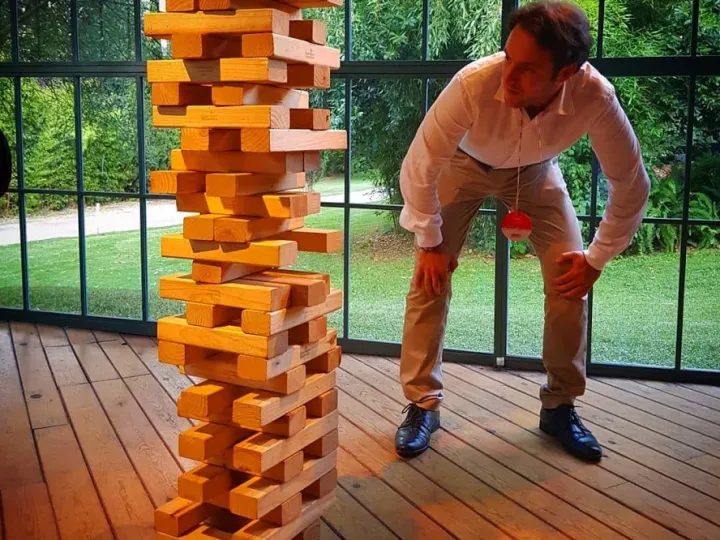
Giant Jenga
The tower nobody wants to topple, in pine wood
- Space Ø 2 m
- Power Not needed
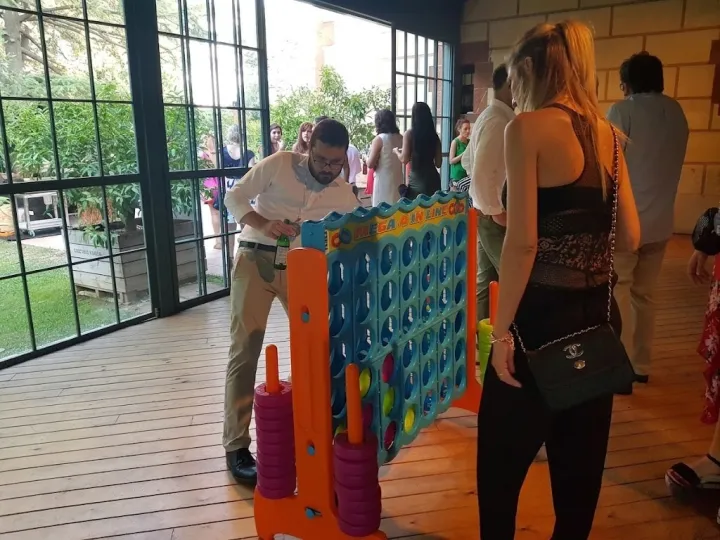
Giant Connect 4
Four in a row, standing up, in five-minute games
- Space 2 × 2 m
- Power Not needed
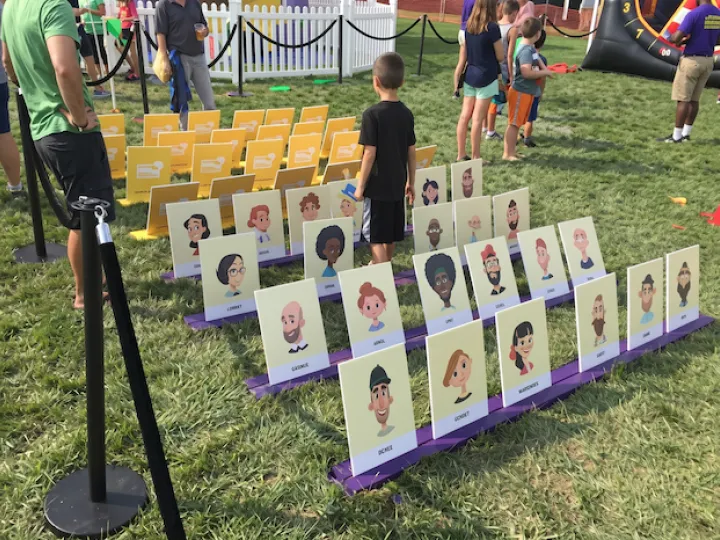
Giant Guess Who
The character guessing game — with your team’s faces if you like
- Space 3.5 × 3 m
- Power Not needed

Human table football
An inflatable pitch where the players are the figures
- Space 9 × 5 × 2 m
- Power 220 V · 1.500 W
Organising a trade show or conference?
We will suggest the games that best suit your stand and audience.
Request a quote