
· 5 min read
Corporate gymkhana with games: how to run a team olympics
How to run a corporate gymkhana with real games: team challenges, scoring, timing, space and branding for your company event.
A corporate gymkhana is the easiest way to turn a company day into a team competition people actually remember. Instead of abstract exercises, teams move through several game stations, collect points and end up with a final ranking and a winner.
If you are planning a company olympics for a team-building day, a year-end party or a staff event, this guide explains how to set up the challenges, which games fit each one and how to organise timings, points and space so the day runs smoothly.
What makes a gymkhana with games different
The traditional gymkhana relies on improvised challenges: sack races, paper quizzes, tug of war. It works, but it depends heavily on someone running it and leaves little room for branding or a clear scoreboard. With real games the approach changes: every station has its own rules, its own challenge and a natural way to score.
Another advantage is that the game explains itself. Nobody needs long instructions to understand bowling, mini golf or a head-to-head table football match, so teams move from one station to the next with very little downtime.
Strategy and cooperation challenges
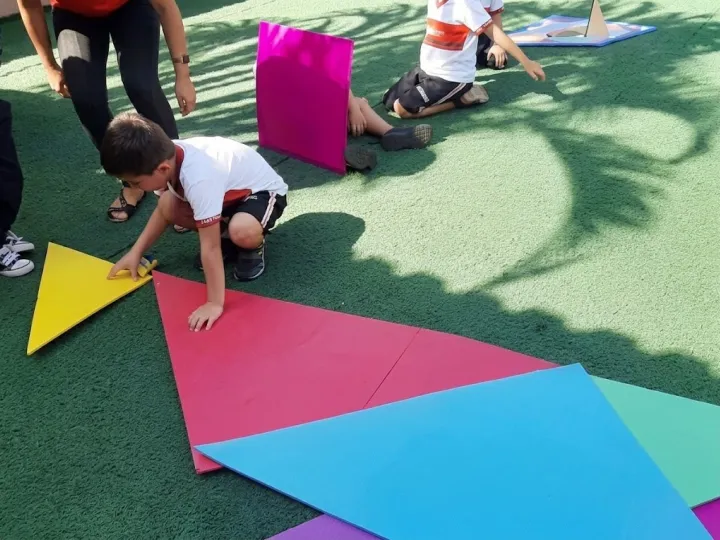
Start with a challenge where the whole team works at once. The giant tangram works well: teams must recreate a figure using every piece, a logic and collaboration puzzle in which you quickly see who listens and who takes charge.
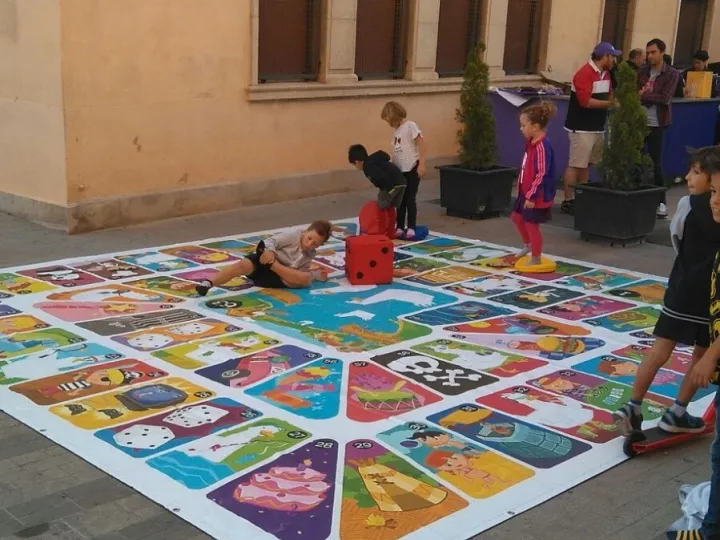
Another option is the giant game of the goose, where the participants themselves move square by square across a 5 × 5 m mat with a giant die. It is a more relaxed challenge, ideal as a warm-up or a break between more physical ones. Combine a thinking challenge with an action challenge so everyone on the team finds their moment.
A well-designed gymkhana alternates rhythms: a calm challenge, an explosive one, a team one and a duel. That way nobody burns out and every profile, from the most competitive to the most reserved, gets a chance to shine.
Accuracy and strength challenges
These are the games that raise the volume in the room. The giant inflatable bowling set, with fireproof treatment and M-2 certification, offers quick turns and spectacular strikes, and everyone understands the goal without an explanation.
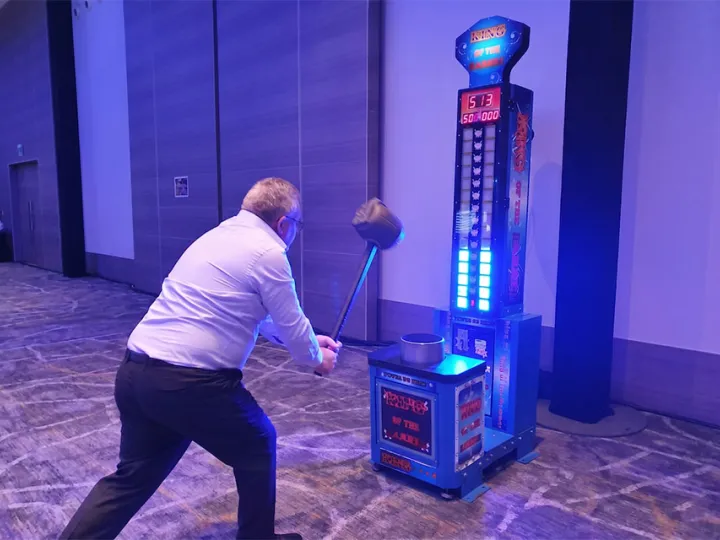
The high striker adds strength: a mallet, a base and a column of lights that rises with the strength of the blow. It is the kind of challenge where the rest of the team cheers loudly, so it works as the centrepiece of a corporate gymkhana even if only one person plays per turn.
- Accuracy: giant bowling, with a fixed number of throws per person.
- Strength: the high striker, using each team's best score.
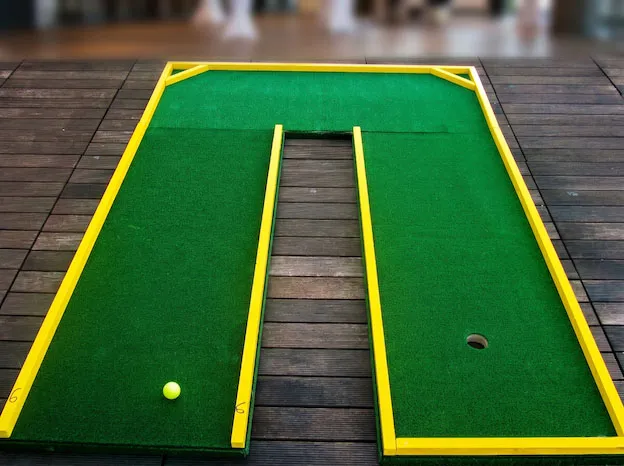
- Skill: mini golf, using the holes of the course as stations.
Head-to-head duels and tie-breakers

Every tournament needs a way to settle ties. Subsoccer fits very well: it is a one-on-one football duel played with the feet on a low table, with two-minute matches and simple rules. Use it as a tie-break round between teams or as a final for pairs.
The key to duels is keeping them short and visible. If the other teams can watch and cheer, the tie-break becomes the most talked-about moment of the day instead of a pause.
Mini golf as the course of your gymkhana
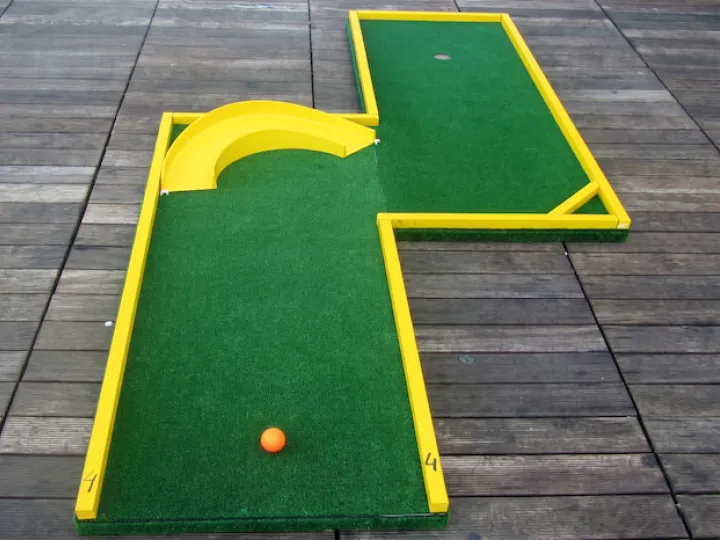
The mini golf is modular: its holes are independent and combine like a circuit, so it adapts to a stand aisle, a terrace or a meeting room. For a gymkhana it is useful because you can treat each hole as a small challenge with its own score.

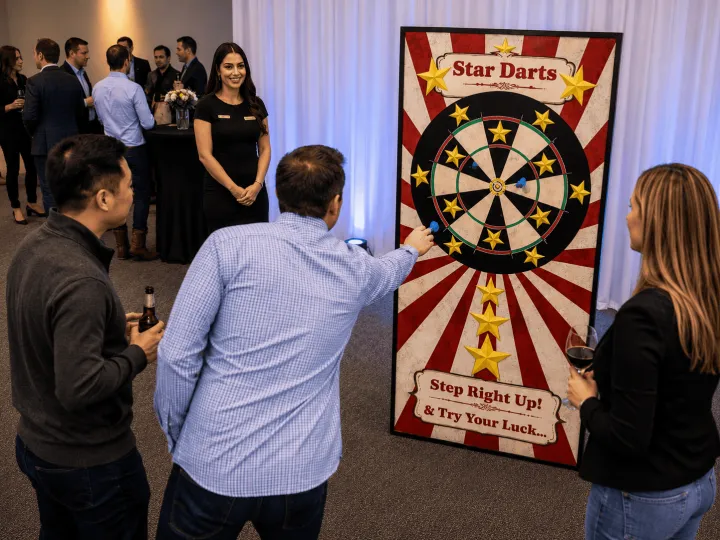
To reinforce the fairground look, the mini fairground games are wooden booths of 190 × 70 cm in the traditional red and white style. They arrive assembled and need neither electricity nor staff, so they are an easy way to add support stations without complicating logistics.
How to organise teams, turns and scoring
Before the event, define three things: the number of teams, the time at each station and the points system. A practical approach is that every team goes through every challenge on a rotation, with a sound signal or a host marking each change.
- Split participants into balanced teams, mixing departments.
- Give each station a set number of turns or a maximum time.
- Score every challenge on the same scale, for example 1 to 5 points by ranking.
- Show the leaderboard on a visible board between rounds to keep the tension up.
- Keep a short final with a tie-break for the closest teams.
Think about space too: noisy challenges are best separated from calmer ones, and queues should not block the aisles. If you are unsure how much room you need, our team can help you lay it out for your venue.
In autumn and winter it works very well as an activity before a company dinner or as part of a year-end day: it breaks the ice, mixes departments and leaves everyone in a good mood before sitting down at the table. It is also a good idea for a sales convention or a kick-off, with a team competition that gives people who rarely meet a reason to get to know each other.
If the event is indoors, work out the metres each station takes up and leave circulation aisles between them. If it is outdoors, have a plan B in case of bad weather. The sooner the space is defined, the easier it is to adjust the number of challenges.
Brand your gymkhana
A gymkhana is a great vehicle for company identity. The games can be customised with your brand: vinyl, team colours, prizes and staff uniforms. You can see the options on the custom branding page.
You can also give each team a corporate colour or name, put your logo on the leaderboard and hand out prizes with the company brand. That way the competition reinforces the message of the event instead of being a separate add-on.
Frequently asked questions
How many challenges should a corporate gymkhana have?
Four to six stations are usually enough. More challenges stretch the day, and fewer leave little room for rotation.
How many people can take part?
It depends on the number of stations and turns. A large group can be split into more teams, duplicating the most popular challenges.
Do you need staff to run the challenges?
You should have at least one host to explain the rules, keep time and record points. Some games need no staff of their own, but the gymkhana as a whole benefits from a good presenter.
Can it be held outdoors?
Yes, many games adapt to terraces and gardens. Talk to us about the space and the conditions for each challenge.
What does the cost depend on?
It depends on the games chosen, the duration, the staff and the customisation. The easiest way is to ask for a tailored quote.
Tell us how many of you there are, what space you have and what atmosphere you are after, and we will suggest the challenges. Write to us on the contact page or take a look at the full games catalogue first.
Games in this article
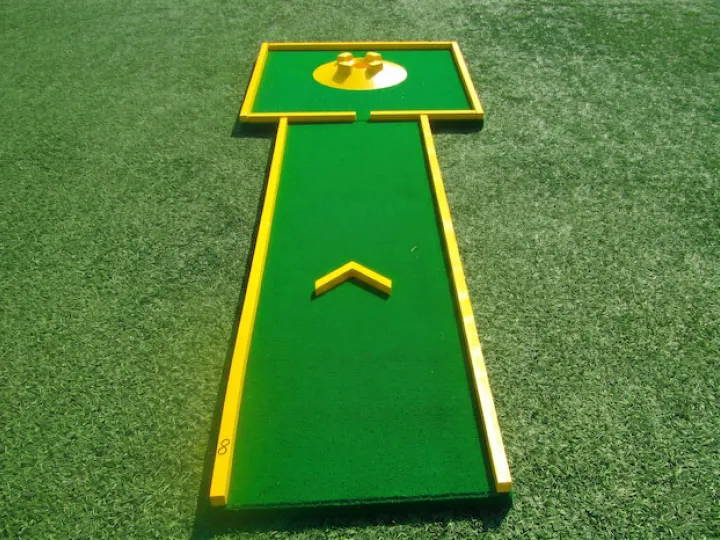
Mini golf for events
Modular holes that adapt to the space you have
- Space From 2.3 × 1 m per hole
- Power Not needed
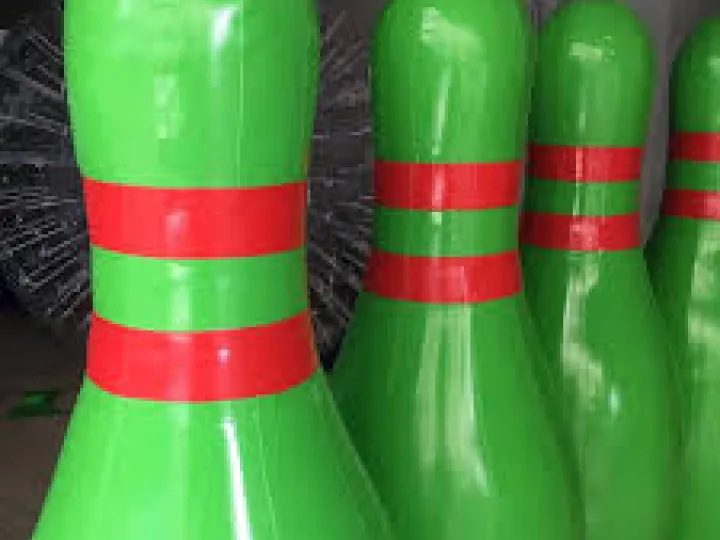
Giant bowling
Knock down inflatable pins with a giant ball
- Space Clear throwing lane
- Power Inflatable blower
Giant tangram
Seven pieces, hundreds of shapes and plenty of teamwork
- Space 3 × 3 m
- Power Not needed
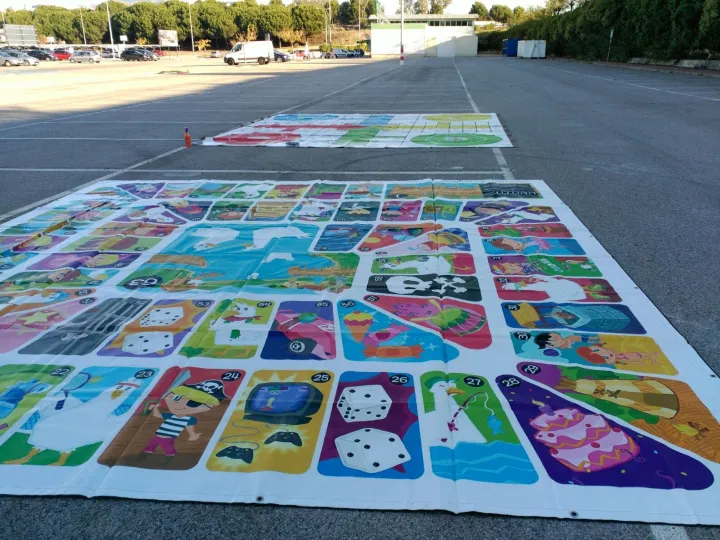
Giant game of the goose
The classic race game, with players as the pieces
- Space 6 × 6 m
- Power Not needed

High striker
The classic strength test, with an LED scoreboard
- Space 2 × 2 m
- Power 220 V · 150 W
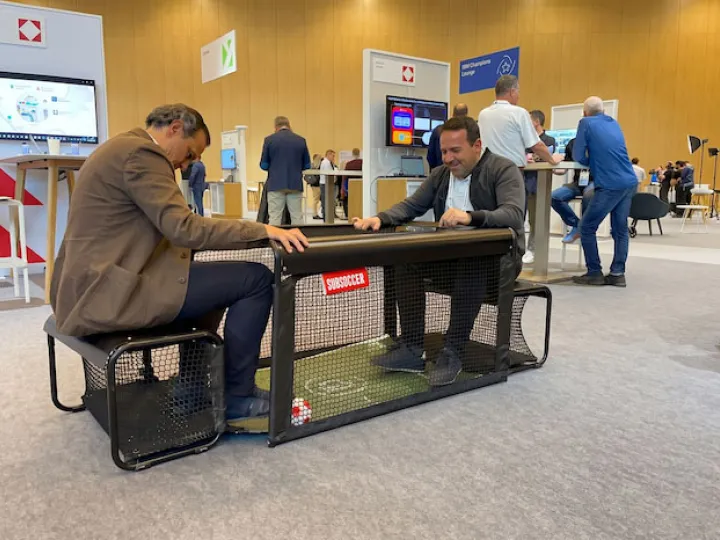
Subsoccer table
One-on-one football played with your feet on a two-metre table
- Space 2.3 × 1 m
- Power Not needed
Organising a trade show or conference?
We will suggest the games that best suit your stand and audience.
Request a quote