
· 2 min read
Trade show stand games: how to attract visitors and turn them into leads
Which game to choose for your stand size, how to use it to capture leads and the mistakes to avoid.
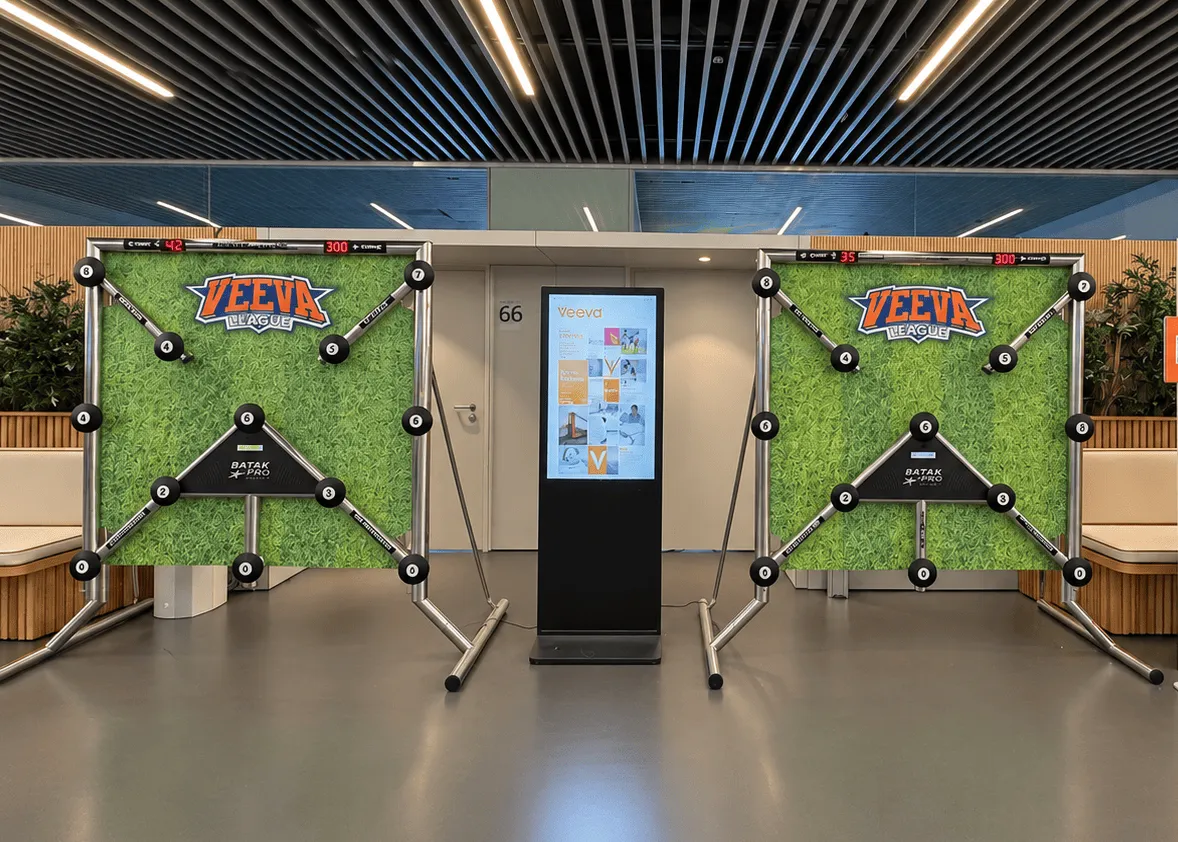
At a professional trade show, visitors walk past dozens of stands a minute. Most look the same: a counter, a roll-up banner, a screen playing a corporate video. A well-chosen game breaks that monotony and achieves the hardest thing of all: getting someone to stop. But a poorly planned game just creates noise. These are the principles we apply when preparing stand games at IFEMA, Fira de Barcelona or any exhibition centre.
1. The game must make sense from the aisle
If it needs explaining, you have already lost the visitor. The games that work best at trade shows have an obvious mechanic: lights that come on and must be hit (the Batak Pro), sticks that drop and must be caught (the reaction ring) or a wheel that spins. Visitors understand the challenge in two seconds and decide whether to try.
2. Short rounds, constant queue
An ideal trade show game lasts between 30 seconds and two minutes. That way the flow of people never jams, your team has time to start a conversation with each participant and the queue renews itself. Simulators hold people longer — three to ten minutes — which is perfect for product demos, but it is worth having a second, quicker game for those who don’t want to wait.
3. A score is a reason to ask for contact details
The most natural way to capture leads is to turn the game into a competition: a daily leaderboard with a prize for the best score. To enter, participants leave their email or business card; at the end of the day you contact the winner… and everyone else. With games of chance, such as the promotional prize wheel or the giant plinko, the mechanic is even more direct: data in exchange for a go.
4. Measure the space before you fall for a game
A 9 m² stand cannot fit a car simulator and a meeting table at the same time. Before choosing, check three figures on each product page: recommended space, power consumption and set-up time. Reflex and promotional games take up 1 to 4 m² and run on a standard socket; simulators need 4 to 9 m². If your stand has no power supply, there are options that need no electricity.
5. Put your brand on it
An unbranded game entertains; a game wrapped in your identity sells. Almost all of them take a wrap, a waiting screen with your video or prizes featuring your product. Allow about two weeks for production.
Mistakes we often see
- Placing the game at the back of the stand, where nobody can see it from the aisle.
- Having nobody from sales next to the game: the conversation is the goal, not the round.
- Prizes unrelated to the brand: better few and good, or featuring your product.
- No follow-up plan: a trade show lead goes cold within a week.
Tell us your stand size, visitor profile and goal, and we will suggest two or three games with their technical sheets so your stand builder can fit them in. Request a quote here.
Games in this article
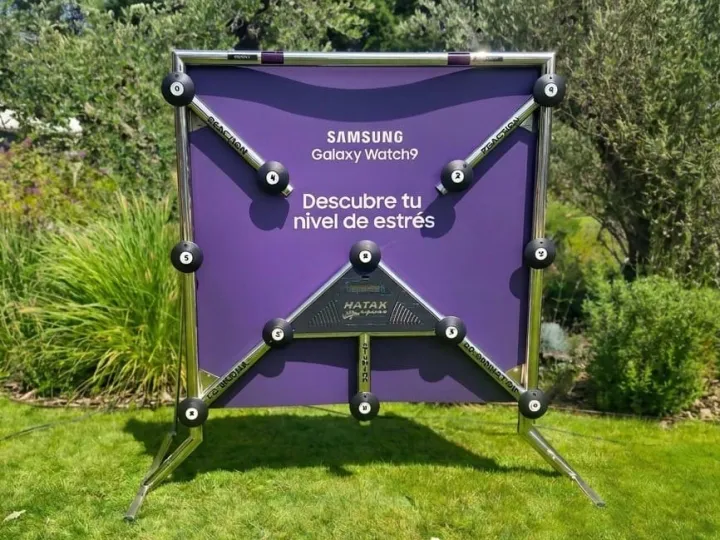
Batak Pro
Hire the most requested reflex game for trade shows and conferences
- Space 2.3 × 1 m
- Power 220 V
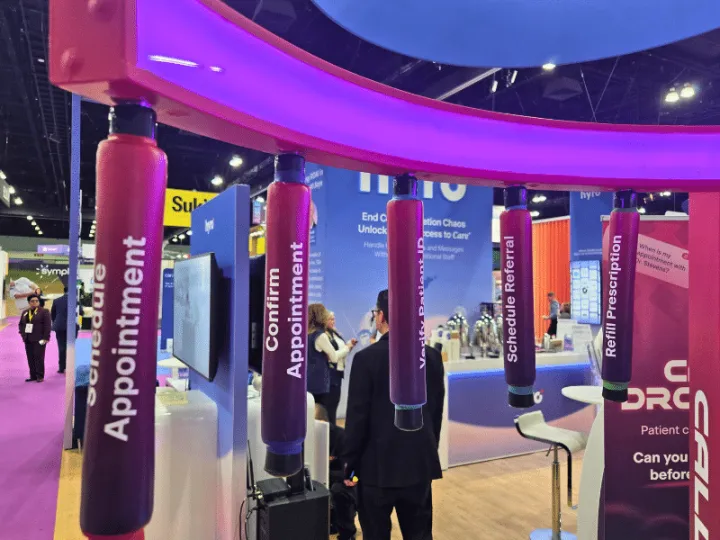
Drop Stick reaction ring
A compact reflex game for trade show stands and conferences
- Space 2 × 2 m
- Power 220 V · 12 W
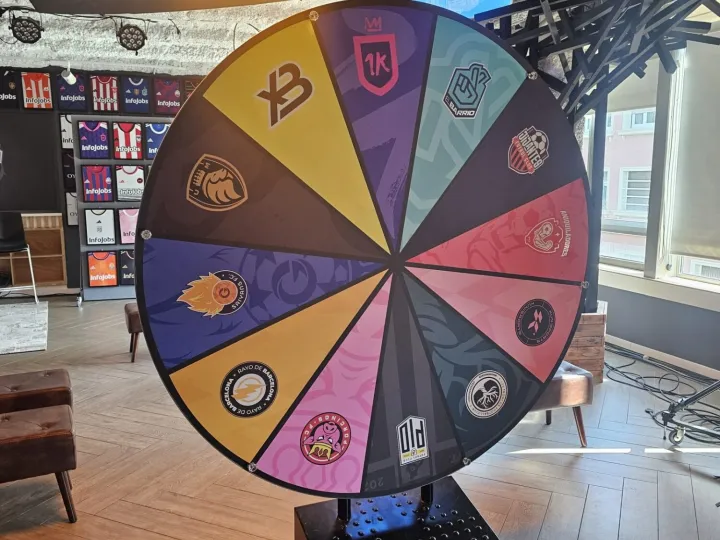
Promotional prize wheels
The wheel with your brand, your prizes and your rules
3 models
- Space 2 × 2 m
- Power Not needed · optional LED
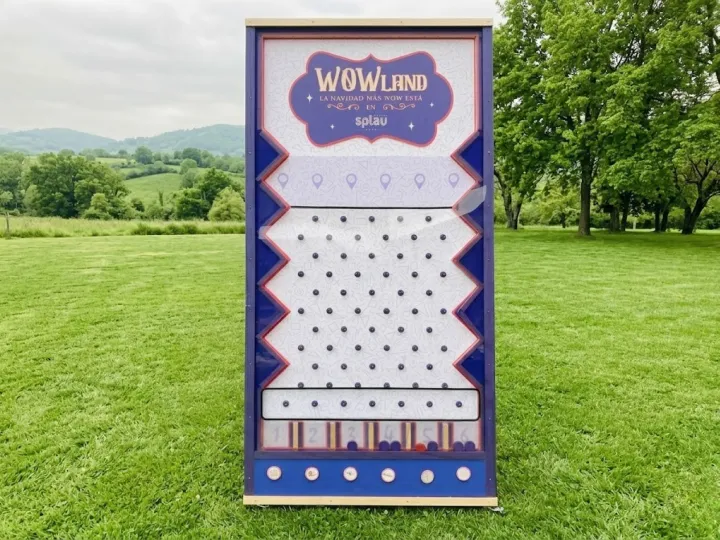
Giant plinko
Drop the disc and watch where it lands — the most hypnotic prize game
- Space 2.5 × 1.5 m
- Power 220 V · 30-60 W
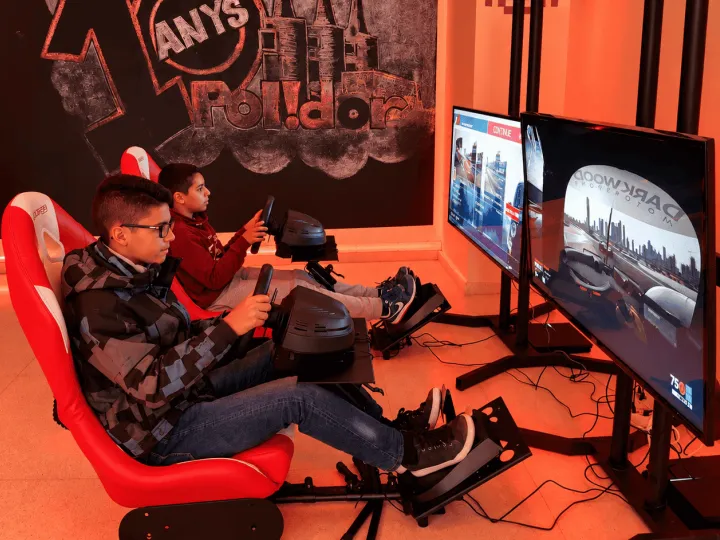
Car racing simulator
Racing seat, force-feedback steering wheel and lap-time leaderboard
- Space 2 × 2 m
- Power 220 V
Organising a trade show or conference?
We will suggest the games that best suit your stand and audience.
Request a quote